Knitted guinea pigs: The Ordinary Knitter - episode 58
/
RSS Feed
Share
Link
Embed
Knitted guinea pigs
Welcome to Knitted guinea pigs, episode 58 of The Ordinary Knitter, the knitting podcast that’s (mostly) about the projects. Find it on iTunes through your podcast app or subscribe via the feed link on the right hand bar (https://www.theordinaryknitter.net/feed/podcast).
My name is Heather and I’m @theordknitter on Twitter, @theordinaryknitter on Instagram and @ordinaryknitting on Ravelry.
This week: it’s all about the cavies, plus other project progress and yarn needs. Christmas is coming and the last minute project explosion is in full swing. Just a reminder that I’ve marked lots of my stash for sale or swap on Ravelry so please do get in touch if there’s anything you’re interested in.
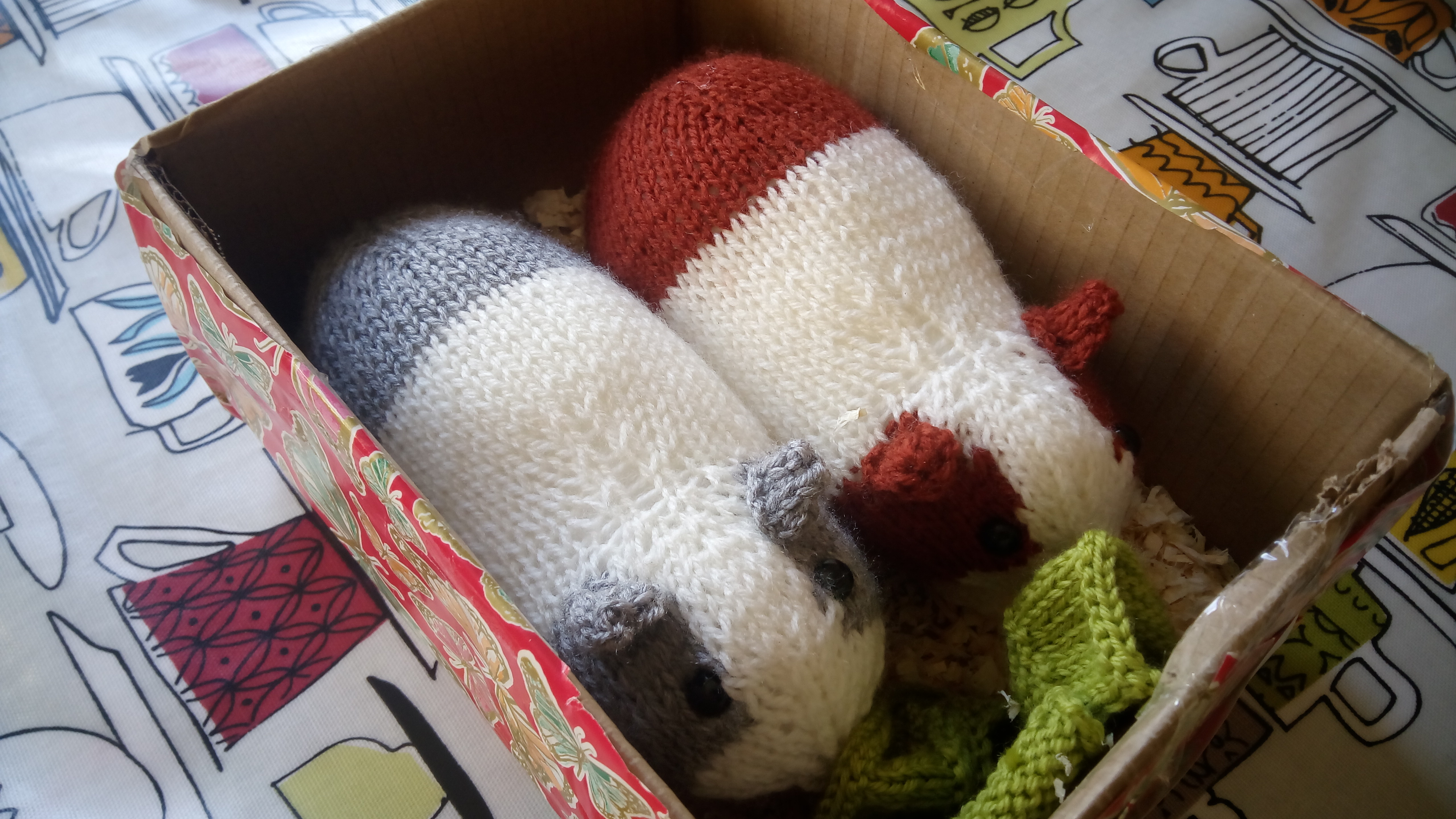
This was one of those last-minute ideas that developed a life of its own. I made one for my son’s friend, then it needed a friend, then they needed lettuce, then I remembered my friend-for-whom-I-knit and for whom I haven’t yet knitted anything for Christmas used to keep guinea pigs (albeit long-haired but I’m going to ignore that inconvenient detail) so she’ll need a couple, then my husband reminded me that his mother and her twin used to keep guinea pigs so that’s another two, and now my son wants one, so it’s going to be wall-to-wall knitted guinea pigs for the foreseeable.
I love this pattern so much because it’s so well done. The shaping and the positioning of the colour blocks is so perfect and the overall effect extremely cute. I was very small last time I felt any urge to keep a small caged rodent, but I could almost be talked into guinea pigs now. The colour options are endless and easily suited to the guinea pig-lover in your life, and as for the knitted food possibilities! I have visions of knitting hundreds of the things and surrounding them with forests of lettuce and carrots.
Music credit:
“Carpe Diem” Kevin MacLeod (incompetech.com)
Licensed under Creative Commons: By Attribution 3.0 License
http://creativecommons.org/licenses/by/3.0/
Welcome to Yarn allergy, episode 57 of The Ordinary Knitter, the knitting podcast that’s (mostly) about the projects. Find it on iTunes through your podcast app or subscribe via the feed link on the right hand bar (https://www.theordinaryknitter.net/feed/podcast). My name is Heather and I’m @theordknitter on Twitter, @theordinaryknitter on Instagram and @ordinaryknitting on Ravelry.
This week: the Chinese Waitress cast-on, Spikelets Cowl, Knit One Post One and good bad news with related retail opportunity. This week’s episode is V E R Y L O U D for some reason, but then one of my bugbears is podcasts that are barely audible, so just turn the volume down on me if it’s too shouty.
Are there certain fibres you don’t get on with? An allergy to wool is pretty common, mainly due to the lanolin content. It does wonders for some people’s skin and completely the opposite for others’. I haven’t been able to wear wool for decades, but I have knitted items with it as it doesn’t irritate my hands, or at least it didn’t. It’s a little while since I last knitted with it, and in the meantime I have developed an allergy to acrylic yarn. This is a right royal pain in the arse as much of my stash is acrylic.
I know there’s not much love for acrylic yarn out there, but as well as being affordable it’s a good substitute for wool in terms of knitting texture. I’d previously considered it a yarn no-one could be allergic to and so safe for anyone, but the merest bit of research has returned a huge amount of data on allergy to acrylic and other man-made fibres.
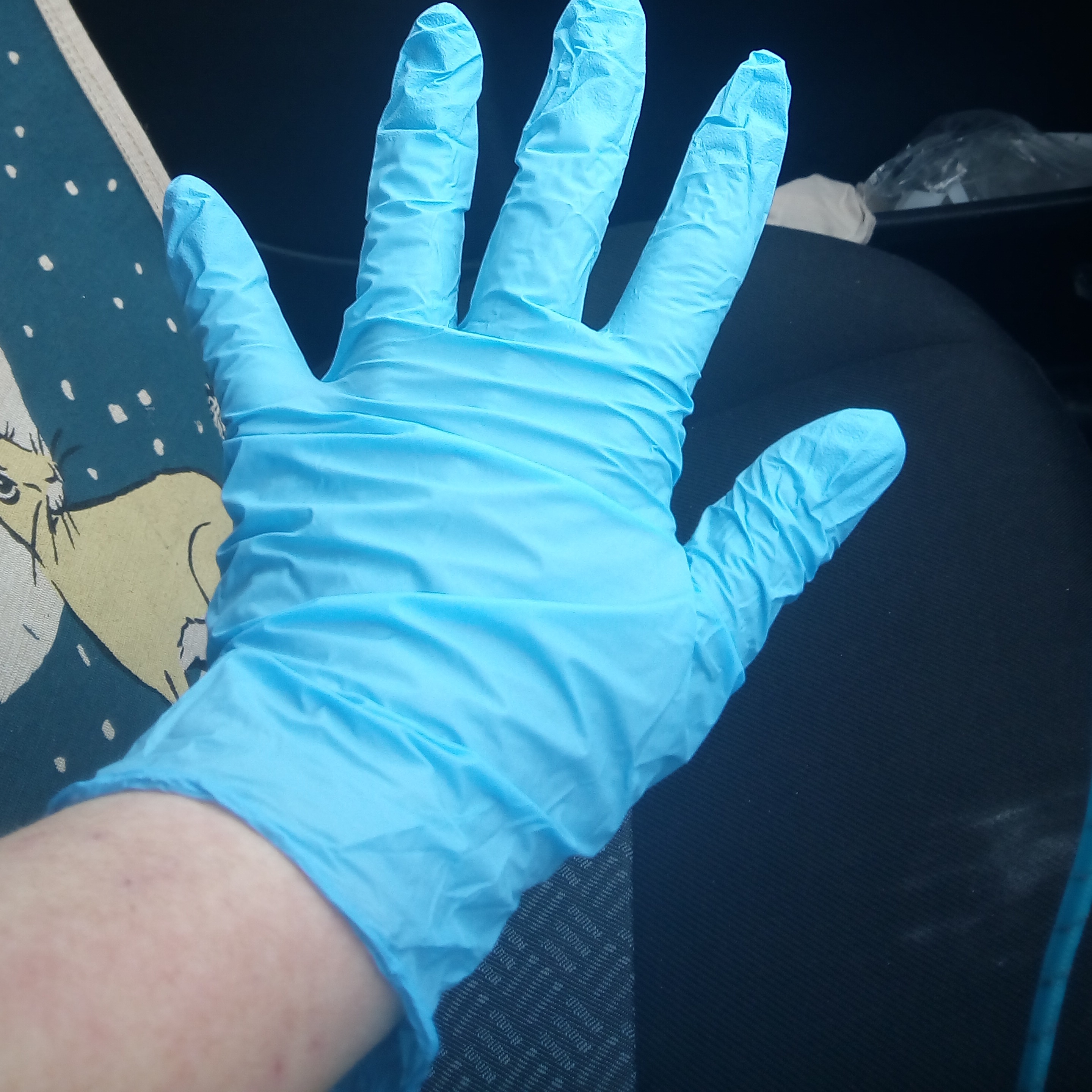
So what do you do if you develop an allergy to a fibre you use frequently? The simple answer to that is to stop using it, but what do you replace it with? As I discuss in the pod, I’ve taken to wearing hypo-allergenic nitrile gloves but I don’t think this is a sensible long-term solution. As I have projects on the go I’ll continue them with the gloves, but I think the only solution for me is to ditch my acrylic stash and replace it with cotton and bamboo. What bothers me is that this could seriously restrict the type of projects I can knit as cotton and bamboo aren’t the right texture for just anything. For now I’ll just have to see what makes sense as projects come up.
Music credit:
“Carpe Diem” Kevin MacLeod (incompetech.com)
Licensed under Creative Commons: By Attribution 3.0 License
http://creativecommons.org/licenses/by/3.0/
Welcome to Cowls, episode 56 of The Ordinary Knitter, the knitting podcast that’s (mostly) about the projects. Find it on iTunes through your podcast app or subscribe via the feed link on the right hand bar (https://www.theordinaryknitter.net/feed/podcast). My name is Heather and I’m @theordknitter on Twitter, @theordinaryknitter on Instagram and @ordinaryknitting on Ravelry.
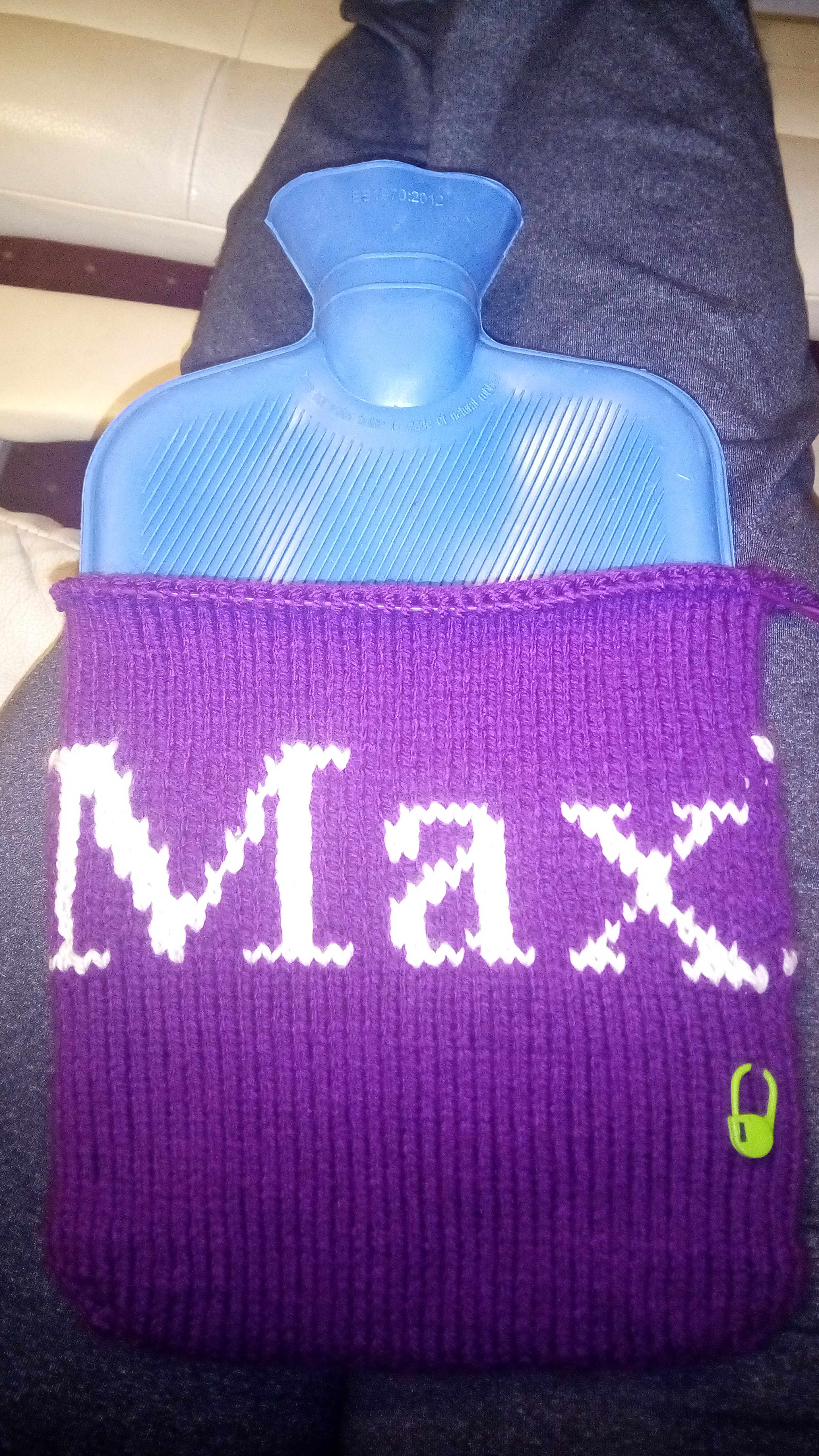
This week: finishing the final facecloths (or maybe not), hot water bottle covers, gauge swatching and cowls. Thank you very much to everyone new to the podcast via iTunes. My listener figures have been rising gradually all year and I guess it shouldn’t surprise me to see them growing more rapidly now the pod is available on iTunes.
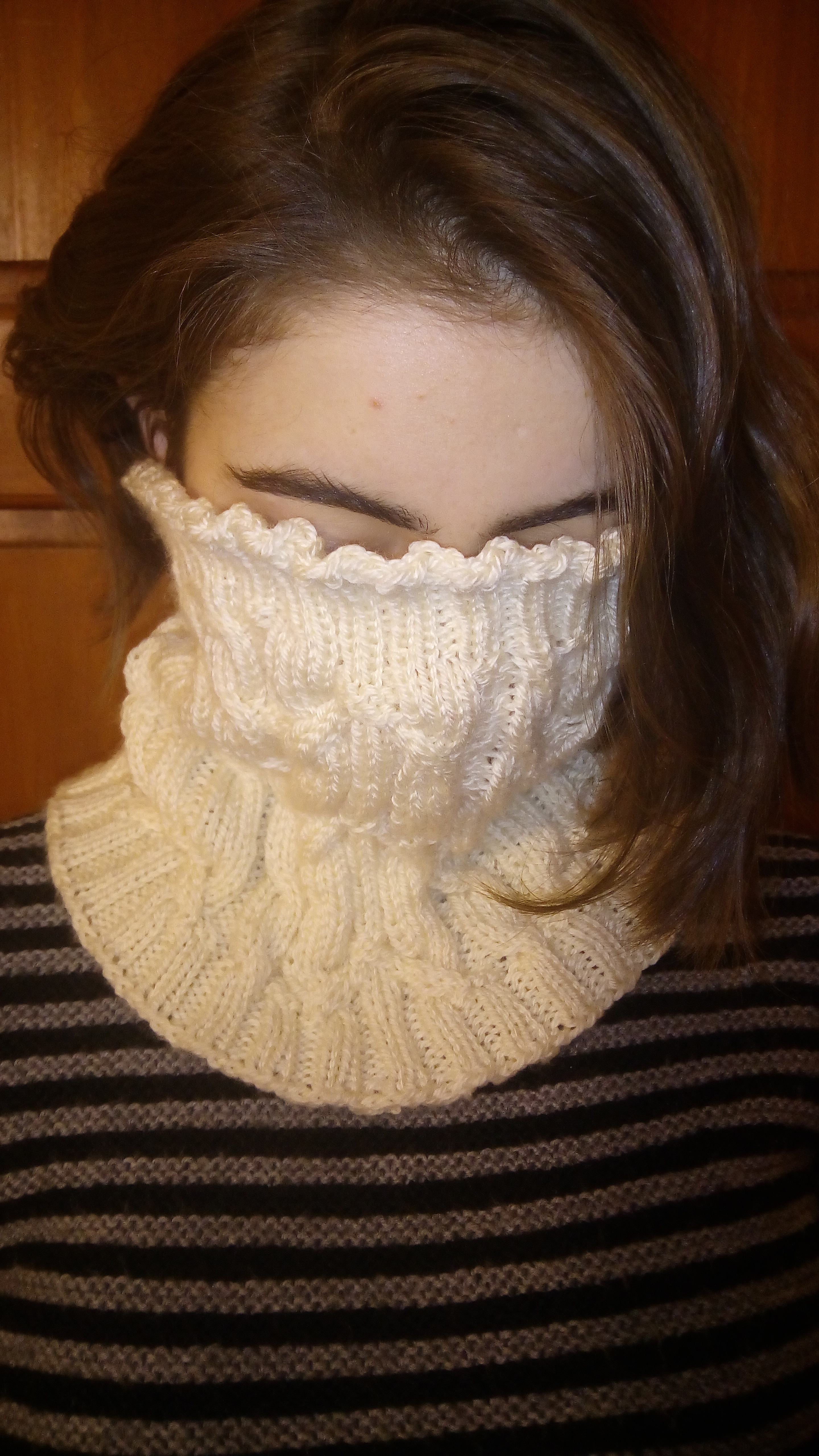
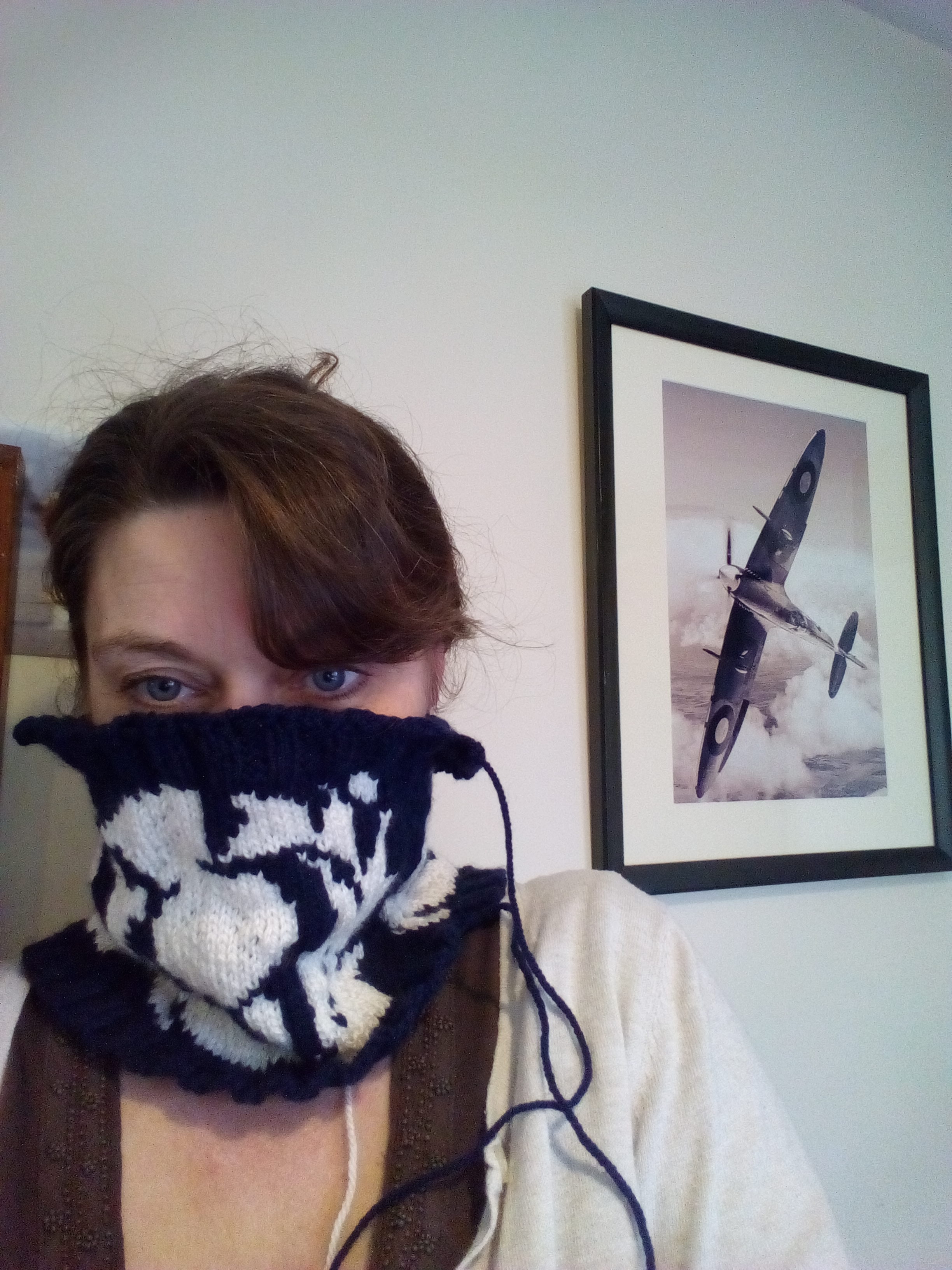
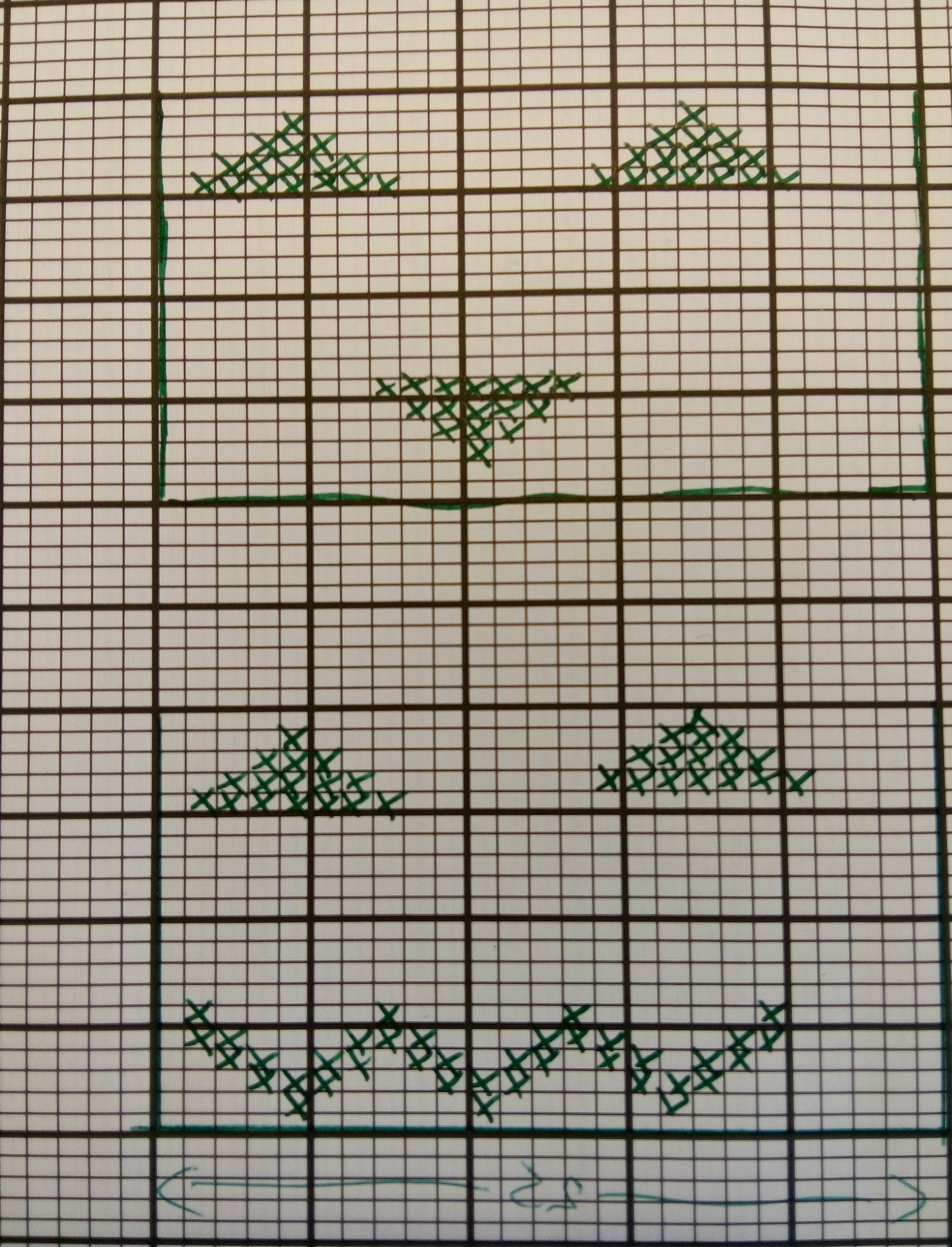
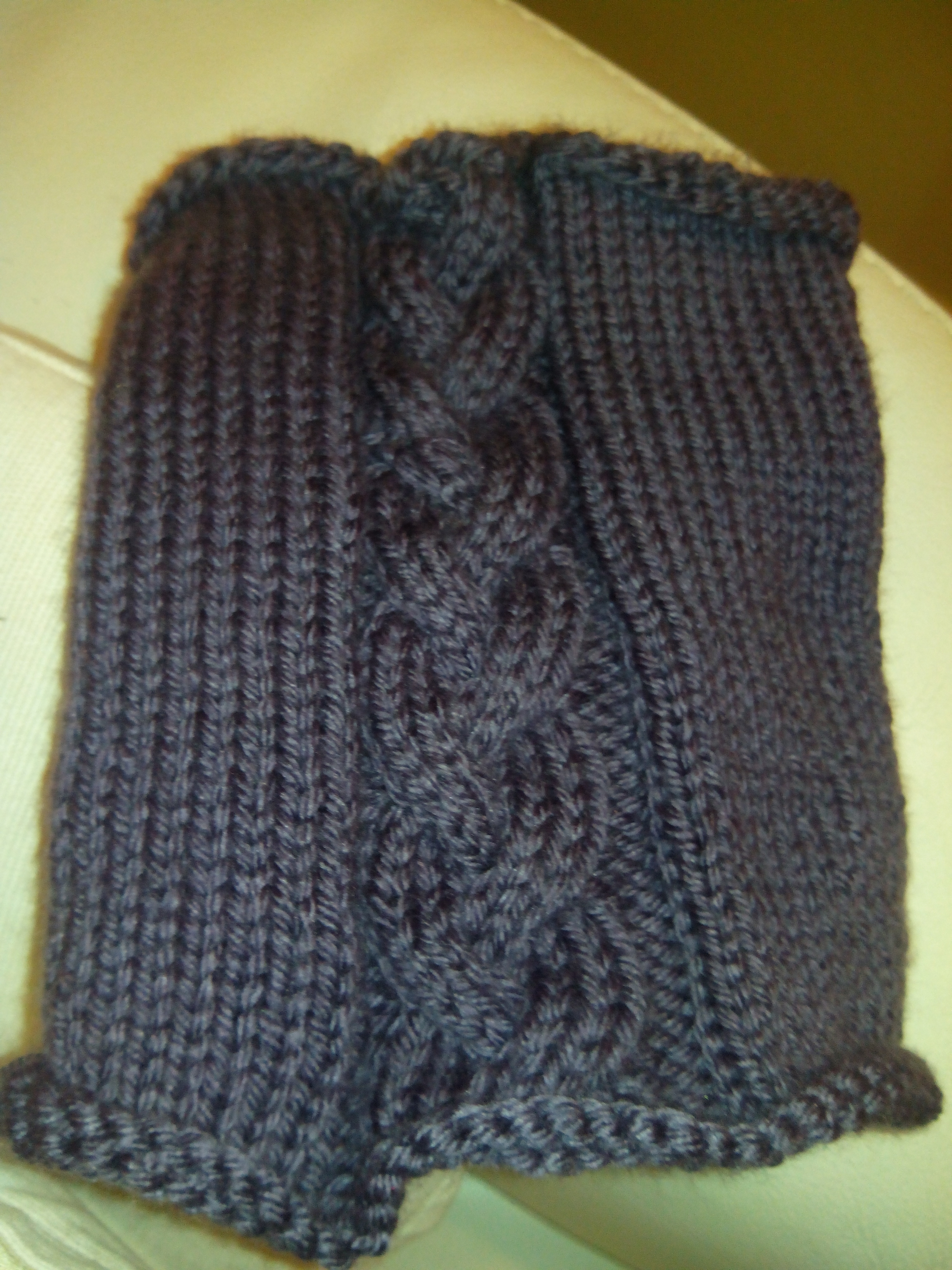
I love cowls. There are no ends to come undone, tickle or dangle, so you stay really cosy. There’s a huge variety of patterns, they knit up quickly and make lovely presents. For all these reasons I’ve decided to make one as a present for my sister in law, who will be staying with us at Christmas. This is a small sop to my intention earlier this year to make myself several cowls so that I had something for every occasion and outfit, not that I really think in terms of outfits. I made myself a cowl for the 6 Nations match I went to at Murrayfield in March, featuring the Scotland rugby logo (left), and had hoped to make several more. I’d also planned a cape-type thingummy and even a poncho – where has this year’s knitting time gone?
Music credit:
“Carpe Diem” Kevin MacLeod (incompetech.com)
Licensed under Creative Commons: By Attribution 3.0 License
http://creativecommons.org/licenses/by/3.0/
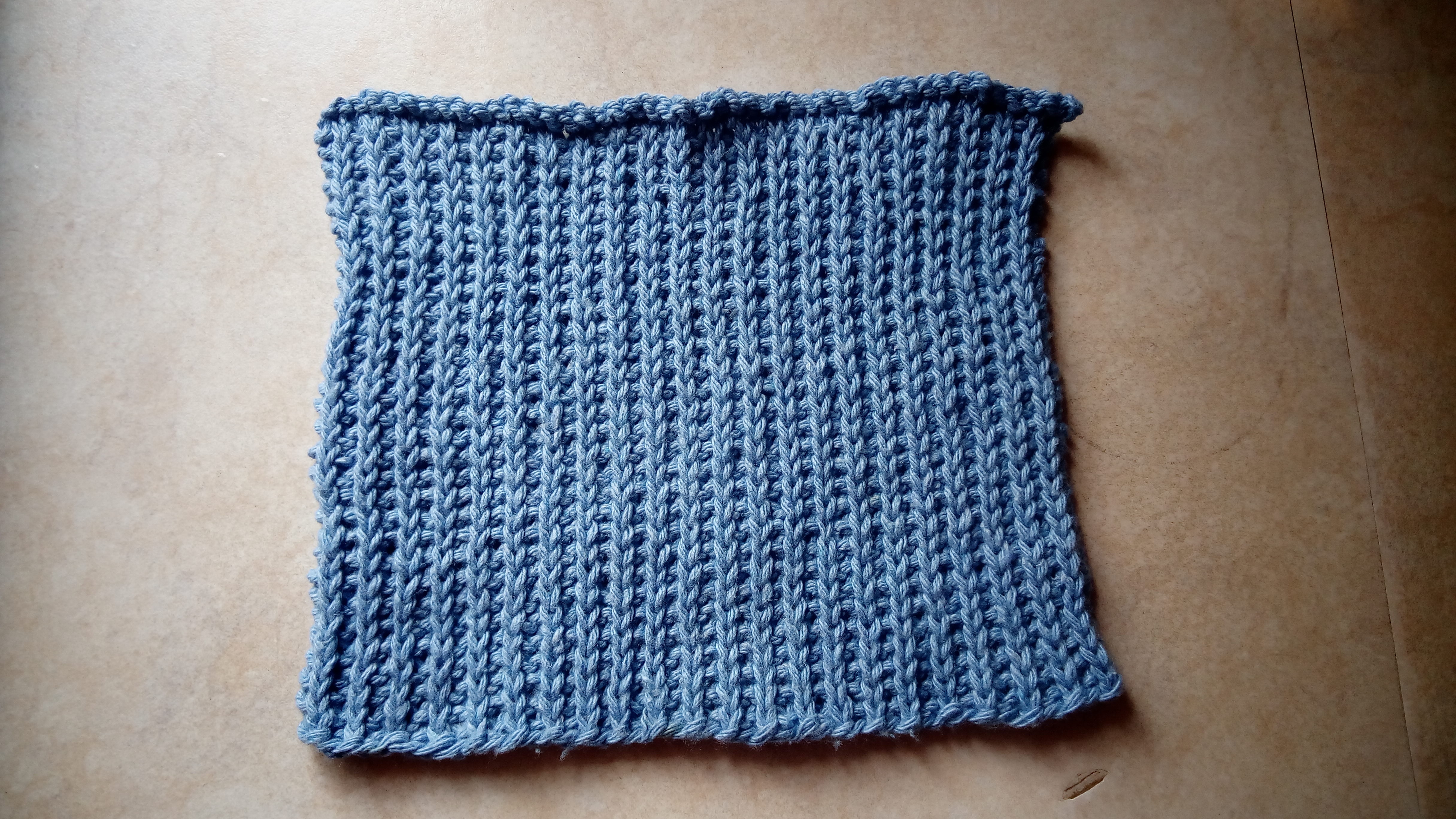
Mamaw’s Choice by Sarah Stevens in King Cole Recycled Cotton Aran in Cornflower
Welcome to Facecloths, episode 55 of The Ordinary Knitter, the knitting podcast that’s (mostly) about the projects. Find it on iTunes through your podcast app or subscribe via the feed link on the right hand bar (https://www.theordinaryknitter.net/feed/podcast). My name is Heather and I’m @theordknitter on Twitter, @theordinaryknitter on Instagram and @ordinaryknitting on Ravelry.
This week: Facecloth success and failure (there’s too much failure at the moment – I’ll band that F-word from the next episode), looking for needle recommendations, and a couple of lovely-looking knitting books.
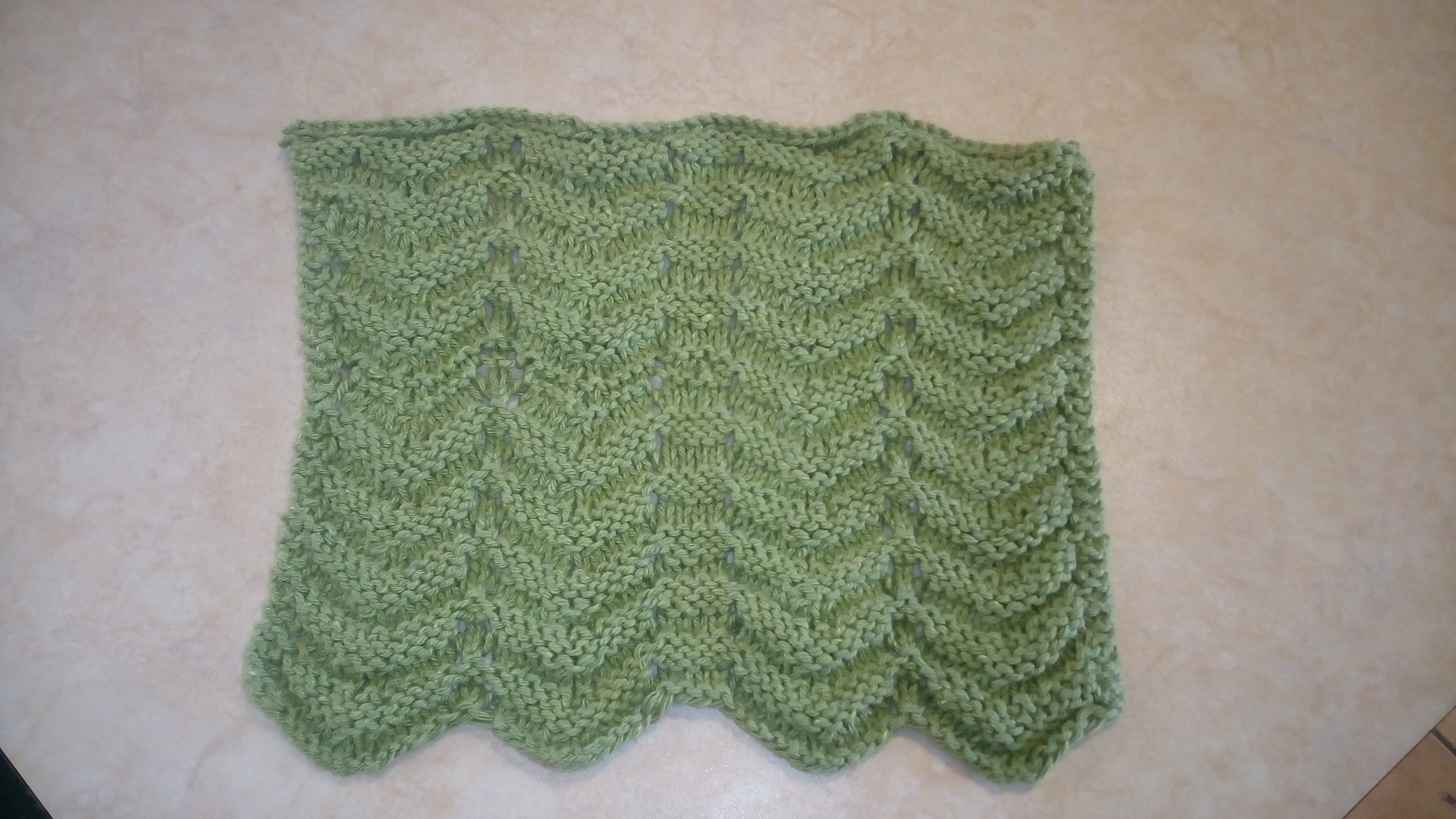
Feather & Fan by Lily Sugar’n Cream and Bernat Design Studio
These make lovely gifts and are great stashbusters. Ideally they should be made in cotton as they’re made to get wet then dry out, get wet then dry out, get wet then dry out, and cotton stands up well to this. There’s a vast array of choice of ease or complexity of design, weight of yarn, size of finished article, shape of cloth and so on and so on. Whether you’re knitting for your granny, your granddaughter, a charity drive or for yourself, you’ll find a design you like.
As a stashbuster, you need to be guided by weight of yarn. This isn’t always vital – I talk in this episode about an aran pattern that knits up to 12″ x 12″ which I think is too big, so I’m making it in DK in the knowledge that it will come out smaller. Make a judgment depending on what’s most important to you. I went out and bought the DK as I had no cotton DK at all, but I was able to use up some cotton aran stash. I have two more cotton aran part-skeins left so may crack out a couple more facecloths if I find I have time.
I’ve chosen three very different patterns – four, if you count Honeycomb. Mamaw’s Choice was such a beautifully simple design I just had to knit it. It’s also a smaller piece so useful for smaller quantities of stash yarn. I might do another in pink for my mum. Feather and Fan was chosen as it’s a traditional style, and Candle Flames was a dramatic and sinuous design that I just loved.
Music credit:
“Carpe Diem” Kevin MacLeod (incompetech.com)
Licensed under Creative Commons: By Attribution 3.0 License
http://creativecommons.org/licenses/by/3.0/
Welcome to Charting, episode 53 of The Ordinary Knitter, the knitting podcast that’s (mostly) about the projects. My name is Heather and I’m @theordknitter on Twitter, @theordinaryknitter on Instagram and @ordinaryknitting on Ravelry.
This week: using charts in a knitting pattern, so near and yet so far on Pasadena, knitted face cloths and misplaced maternal priorities. I’ve had some kind words about the pod this week, so thank you. Listener numbers are also quite good, but it’s been suggested to me that I get the pod available on more platforms. This is one of those long-standing things I’ve been meaning to get round to but this has given me a nudge so I’ll try to make progress on it. If anyone feels like helping me get the pod onto iTunes I would bite your hand off as I just can’t make head nor tail of it.
I thought it was going quite well at this point, but I had made a strategic error!
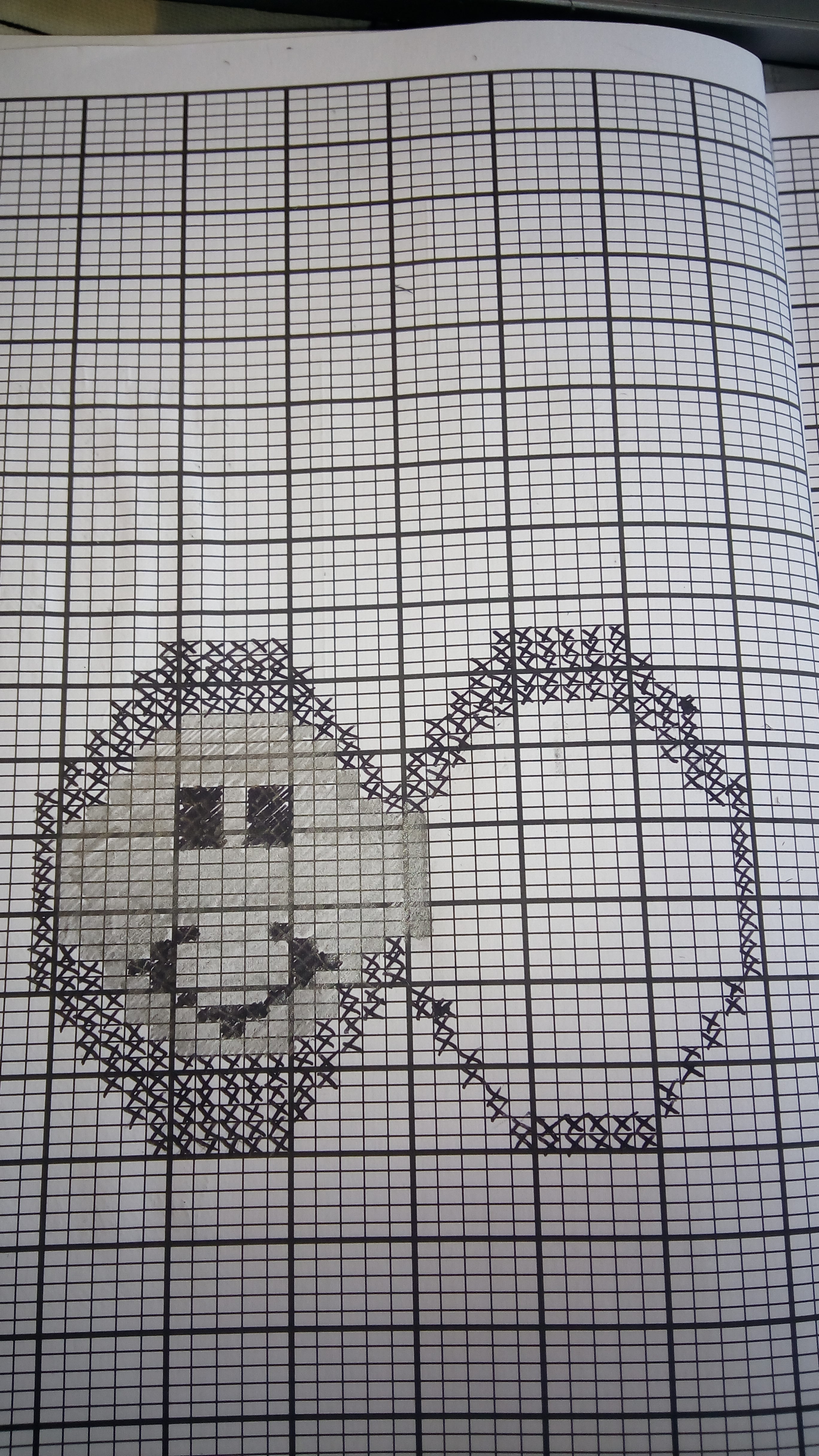
Charts are a common feature of knitting patterns, especially ones containing a complex stitch pattern, a multi-coloured image or for lace. The crucial point to remember for charts is that they’re worked bottom to top, right to left, so completely counter-intuitive to how we usually read in the West. But if you think about it, knitting is often created bottom to top, right to left, so it’s actually very logical.
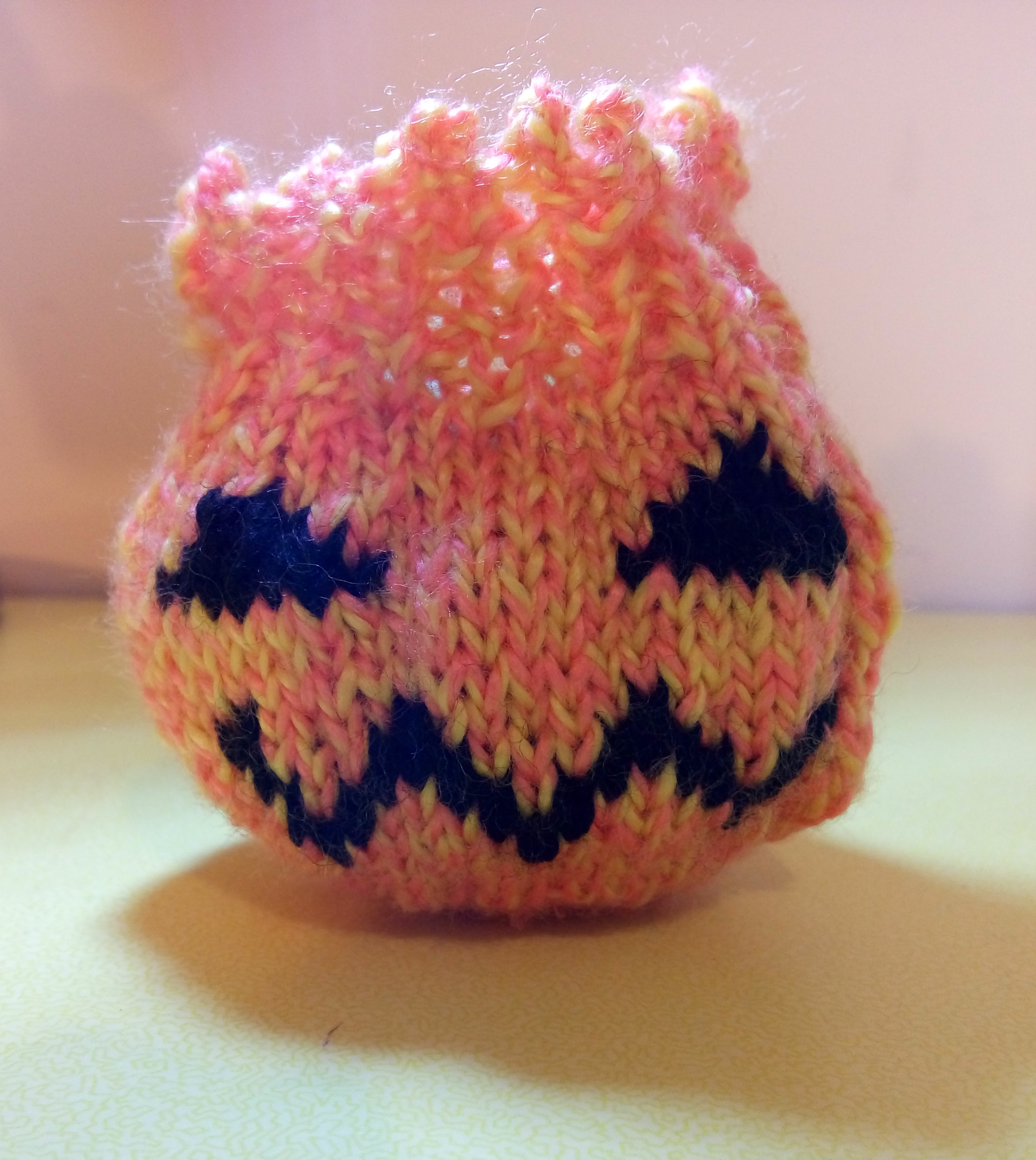
Using charts can be daunting at first, so as with so many aspects of knitting, start with something simple, get your head round the concept, then go for something more involved. Creating a chart is a whole other proposition. I talk in the pod about creating a smiley face chart and I literally spent two hours yesterday evening trying to get the spacing of the features spot on, and then siting the face within the yellow circle. I repeatedly had problems getting even spacing, and ended up leaving it til today, but I’m avoiding it! It doesn’t help that I’m using magic loop for something that’s written for DPNs so I think my first step is going to be making a bauble and checking the measurements work. I’ve confused myself so need to be sure of that before I go much further. It’s a good while since I’ve made one of these and I think my brain is full.
Music credit:
“Carpe Diem” Kevin MacLeod (incompetech.com)
Licensed under Creative Commons: By Attribution 3.0 License
http://creativecommons.org/licenses/by/3.0/
Raar! Terrifying pumpkin apple cosy from last year.
Welcome to Wrist Pain, episode 52 of The Ordinary Knitter, the knitting podcast that’s (mostly) about the projects. My name is Heather and I’m @theordknitter on Twitter, @theordinaryknitter on Instagram and @ordinaryknitting on Ravelry.
This week: Pasadena progress (never gonna get old), being kind to wrists, planning short projects, and following up what I was saying about asking questions on Ravelry. This episode was meant to be out earlier in the week, but technology and life had other ideas. Thank you for all the listens – my listener figures have leapt recently, so I hope you’re all enjoying what you’re hearing.
Too much knitting of this resulted in ongoing hand pain. I’ll be very careful next time I knit a husband.
Wrist Pain
This can be, but shouldn’t be, an occupational hazard of knitting. Between the tiny reptitive movements, the tension in the arm and knitters’ desire to stay exactly where they are doing what they love doing most, it’s possible to do quite a lot of damage to the nuts and bolts in the arm, wrist, palm and fingers. Doing a little bit of research for this episode, I was horrified to discover that some knitters spend years managing their pain and others have had to take prolonged breaks – months at a time.
Of course it’s not just knitting we use our hands for, however much we might wish it was. As I talk about in this episode, hands and arms come under strain using a computer (that’s typing and using a mouse), using a smartphone, driving, cooking etc. Making changes to how I use a mouse and to how muych time I spend stretching my hand holding my phone has helped to reduce the tension in my arm, and I’ve definitely noticed an improvement. My hand and wrist are much more comfortable, but I still have to break up knitting into no more than 20 minutes to half an hour at a time. If I stick to the rules my arm plays ball, so for now I have to go with it.
Music credit:
“Carpe Diem” Kevin MacLeod (incompetech.com)
Licensed under Creative Commons: By Attribution 3.0 License
http://creativecommons.org/licenses/by/3.0/
Welcome to Darning, episode 51 of The Ordinary Knitter, the knitting podcast that’s (mostly) about the projects. My name is Heather and I’m @theordknitter on Twitter, @theordinaryknitter on Instagram and @ordinaryknitting on Ravelry.
This week: March Basic pattern review, Pasadena Progress (is that a song title?) and darning. In the intro I mention being kind to wrists as I had planned to talk about that, but then I forgot. I’ll save it til next week. It’s more interesting than it sounds, but you’ll have to trust me on that til next week. I hope you like the new sound effect – I can’t take any responsibility for deafness or burst eardrums.
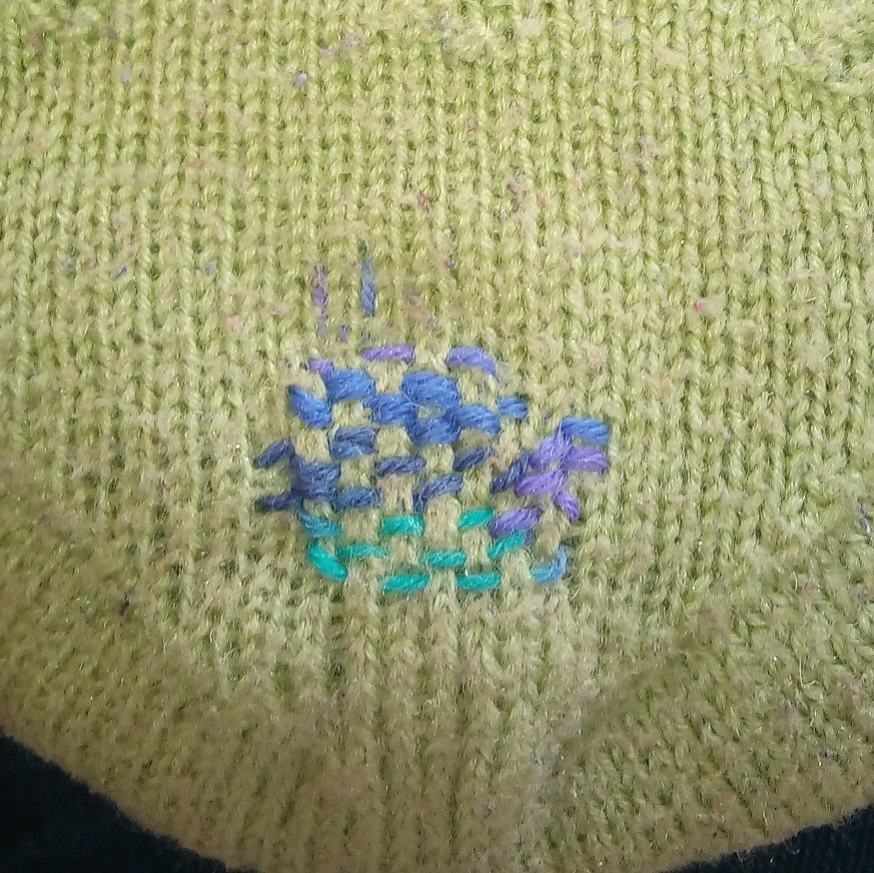
Handknits need that wee bit extra looking after, partly because of the natural materials which tend to be far more appealing to moths than man-made fibres, but also because if you’ve spend a little while making something and then enjoy wearing it, sooner or later it will show signs of wear, or of love. You’ll want to nip a hole in the bud, or even better strengthen the knitting when it’s begun to thin but hasn’t yet gone through. It’s much simpler to strengthen thinned knitting than darn an actual hole.
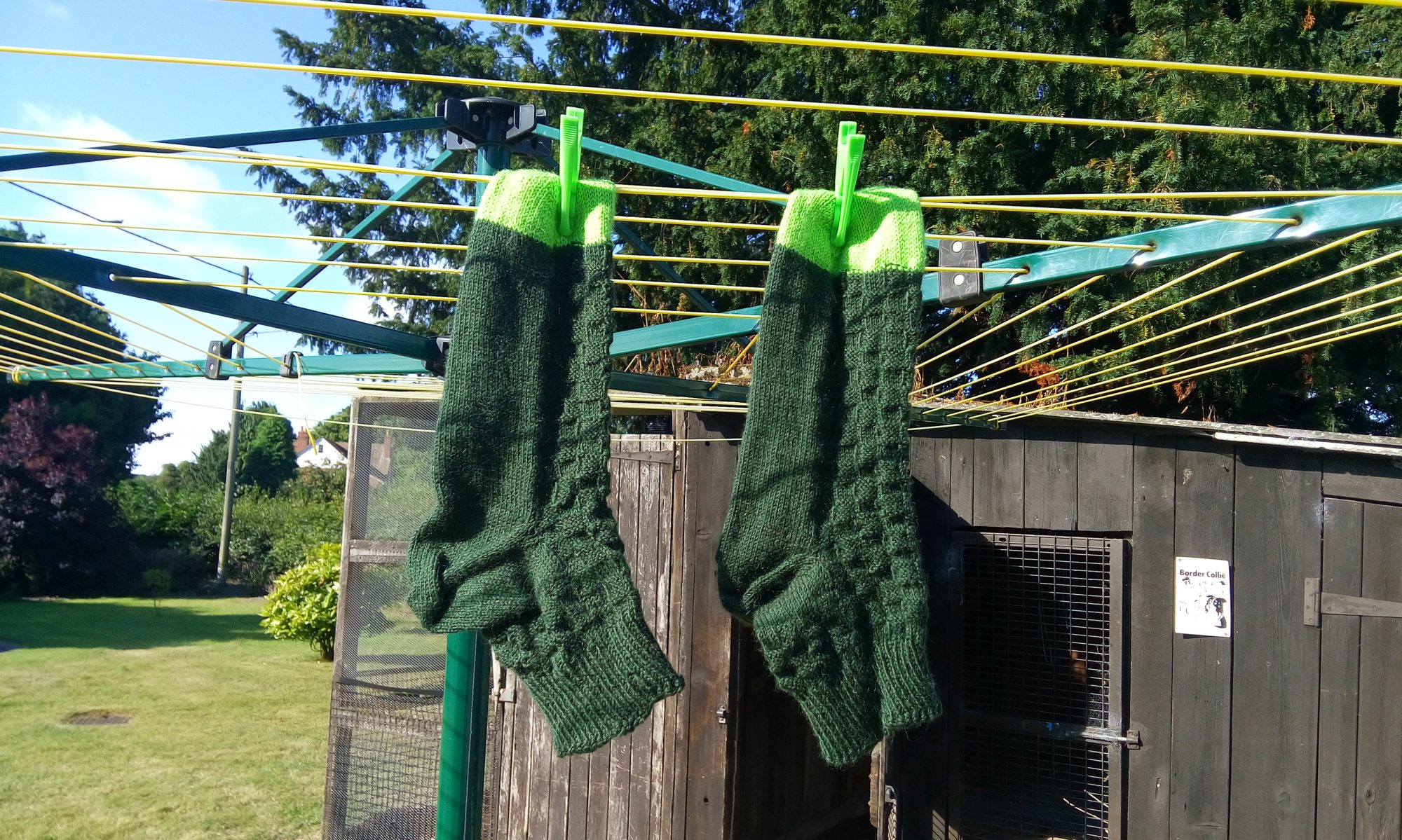
Darning has become a thing. Search on Instagram for the hashtag #darning – there’s nearly 10,000 photos, and that’s a lot of socks. I wanted the darning to be neat, partly to look nice (knitters pride, y’know) but also because I didn’t want it to be lumpy and rub on the heel. As I couldn’t put my hands on the rest of the loud lime 4ply (a Regia yarn I’ve linked to above) I used the remains of a 4ply I’d used to knit over-the-knee socks for a friend, King Cole Zig Zag, now discontinued. The results are okay, but it was tricky to achieve a really neat finish as the knitting has begun to felt. These socks are two-and-a-half years old and might be an early warning that the handknits are beginning to show their age. I’ll be keeping an eagle eye out for any others showing signs of strain and will keep trying to achieve a really neat darn.
Music credit:
“Carpe Diem” Kevin MacLeod (incompetech.com)
Licensed under Creative Commons: By Attribution 3.0 License
http://creativecommons.org/licenses/by/3.0/
Welcome to episode 50 of The Ordinary Knitter, the knitting podcast that’s (mostly) about the projects. My name is Heather and I’m @theordknitter on Twitter, @theordinaryknitter on Instagram and @ordinaryknitting on Ravelry.
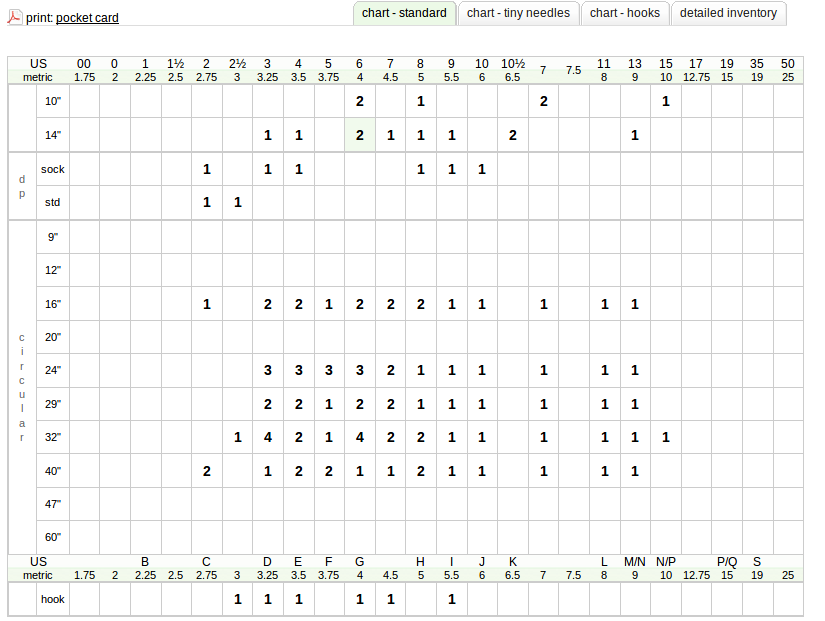
This week: a podcast milestone, Ravelry’s needle inventory, seaming woes and successes, Of the Sea in action and being serially unfaithful (I’m talking about knitting, just in case anyone had aaaany concerns).
I’ve taken a brief break from clearing up vomit, so yep, neglecting my children to talk about knitting.
Horrible lumpy failed slip stitch seam on the left, lovely smooth soothy mattress stitch on the right.
Seaming is often a vital element of a garment. You’ll get away without it if you knit a true raglan that’s knitted in the round and has sleeves knitted in the round, but lots of garments are knitted flat at least in part and the construction will affect how the finished item hangs. Jumpers that are knitted flat and seamed up the sides will hold their shape better than ones that are knit in the round, and the type of seam that you use will depend on a few factors. This page from Vogue Knitting, no less, gives a quick run down of the main methods. There are different methods to use depending whether you’re seaming two bound off edges, two side edges or even two sets of live stitches. Some you work on the right side, some on the wrong side. Some use a crochet hook or a tapestry needle, but many use knitting needles – three needle bind off, as the name suggests, uses three needles.
If you’re seaming two side edges there are few situations where you wouldn’t use mattress stitch, and shoulder seaming uses – you guessed it – shoulder seam grafting. Sometimes though a pattern tells you which method to use, and probably has a good reason for doing so. The Berroco Design Studio had a good reason for stipulating the slip stitch crochet seam for March Basic, namely that it’s a flat seam, but as I made such a horlicks of it I used mattress stitch instead and I can’t see any disadvantage in having done so, so don’t be afraid to make a decision that suits you better. I would say though not to snip the yarn and weave in your ends until you’re sure it’s worked – I do these things so you don’t have to.
Music credit:
“Carpe Diem” Kevin MacLeod (incompetech.com)
Licensed under Creative Commons: By Attribution 3.0 License
http://creativecommons.org/licenses/by/3.0/
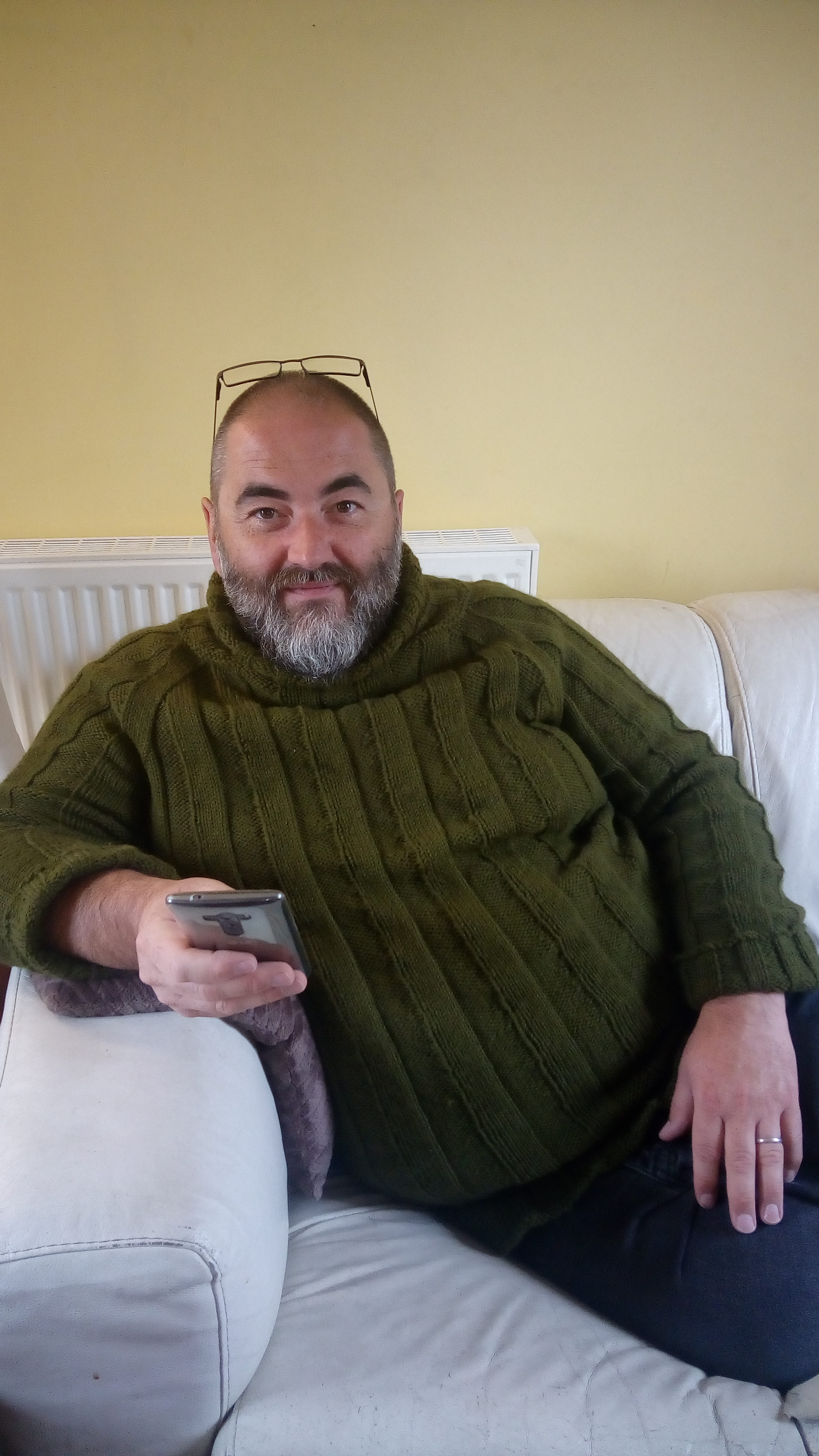
I think this jumper looks great, even on the fuller figure 🙂
Ribbing
Welcome to episode 49 of The Ordinary Knitter, the knitting podcast that’s (mostly) about the projects. My name is Heather and I’m @theordknitter on Twitter, @theordinaryknitter on Instagram and @ordinaryknitting on Ravelry. This week: ribbing and more ribbing – I review Of the Sea by DROPS, look at my progress on March Basic by Berroco and plans for next summer’s knitting (let’s gloss over the big event in December that screws up everyone’s knitting plans). Apologies if today’s pod is a little disjointed. It’s still the school holidays and I was interrupted more than once for real life and death situations. Or possibly not.
Ribbing is a simple pattern of alternating knit and purl stitches that form columns up a piece of knitting. In theory ribbing can be as wide as you like but the biggest rib I’ve ever knitted is 10×10 (ie 10 knit stitches then 10 purl stitches then 10 knit stitches etc). An entire item can be knit in rib or it may just have rib sections, such as is usual either side of a cable. Many items have a section of ribbing at the cuff and hem and this tends to be a small gauge, as small as 1×1 up to 3×3 is common. Rib gives an item stretch side to side that returns to a smaller size so that you can stretch a neck or cuff over a head or hand without leaving it permanently baggy.
Twisted rib section on Ivy
Rib is not always pretty. I had decided to knit a Thomas B Ramsden wrap top pattern but changed my mind when I noticed the deep and fairly ugly rib section on the welt and cuffs, so I went looking for something else. My search turned up Ivy, a wrap top with a decorative twisted rib welt and cuffs. It was intricate and long-winded to knit as a wrap top is a large item anyway (you knit more than you would for a cardigan or top or jumper as you have to create the crossover area too) and the rib was inches deep all the way round the welt and cuffs, but it was so worth it. The finished result is pretty and decorative, but it doesn’t have the spring back of a standard rib so I do find the cuffs hang a bit. I put it all down to experience.
Just a teensy bit of ribbing
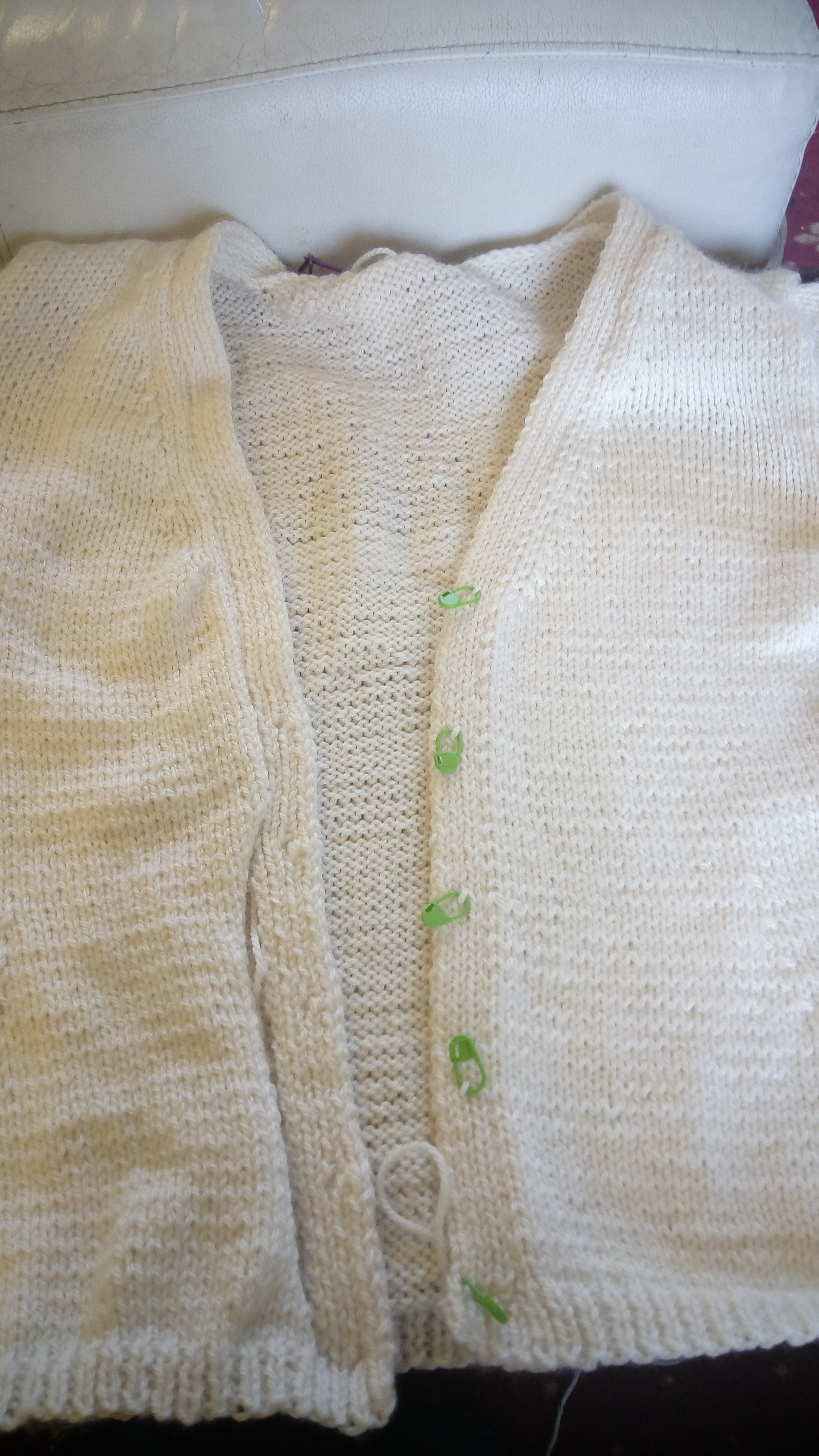
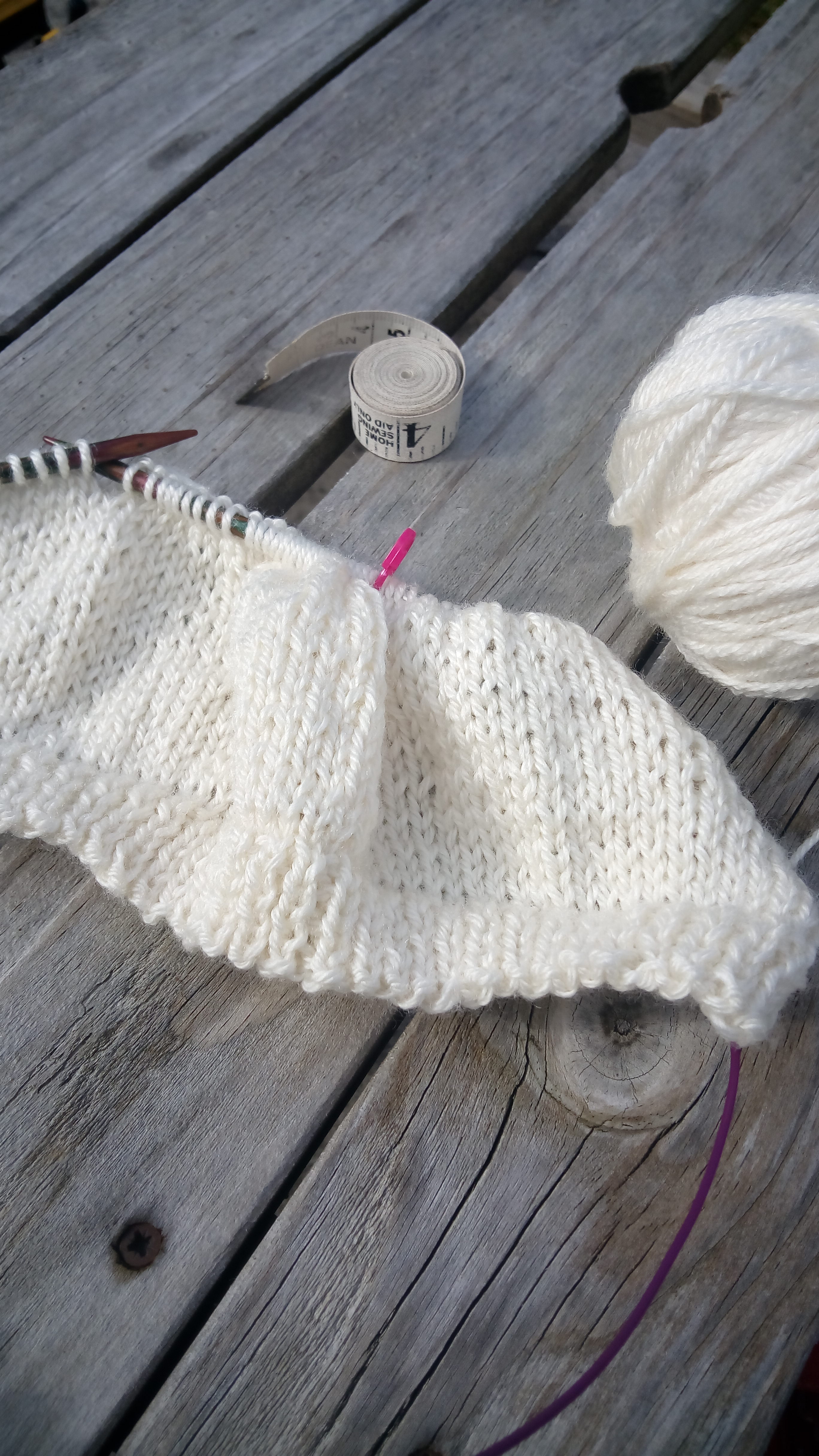
Although useful, ribbing can be slow going as you continually have to move the yarn from back to front. That was why I modified my entire knitting technique (which was ham-fisted), so that now I can simply flip between knit and purl without having to adjust anything manually. Rib serves a purpose but you can have too much of a good thing. I’m delighted that my current project, March Basic by Berroco Design Team, has just an inch of rib, albeit 1×1, at the welt (and no doubt the cuffs too but I’m not there yet and am in denial about it).
Music credit:
“Carpe Diem” Kevin MacLeod (incompetech.com)
Licensed under Creative Commons: By Attribution 3.0 License
http://creativecommons.org/licenses/by/3.0/
Welcome to episode 48 of The Ordinary Knitter, the knitting podcast that’s (mostly) about the projects. My name is Heather and I’m @theordknitter on Twitter, @theordinaryknitter on Instagram and @ordinaryknitting on Ravelry. This week: that manjumper, knitting magazines and pattern books, and slow progress – or no progress – with my new-found enthusiasm for dressmaking. Thank you for sticking with it while I took a little while off. It was partly down to not having much to say about endless yards of 300+ stitches of 6×6 rib, and partly because my mojo took a break.
Just cracked open the second 400g skein of Aldi’s Kirkton House aran
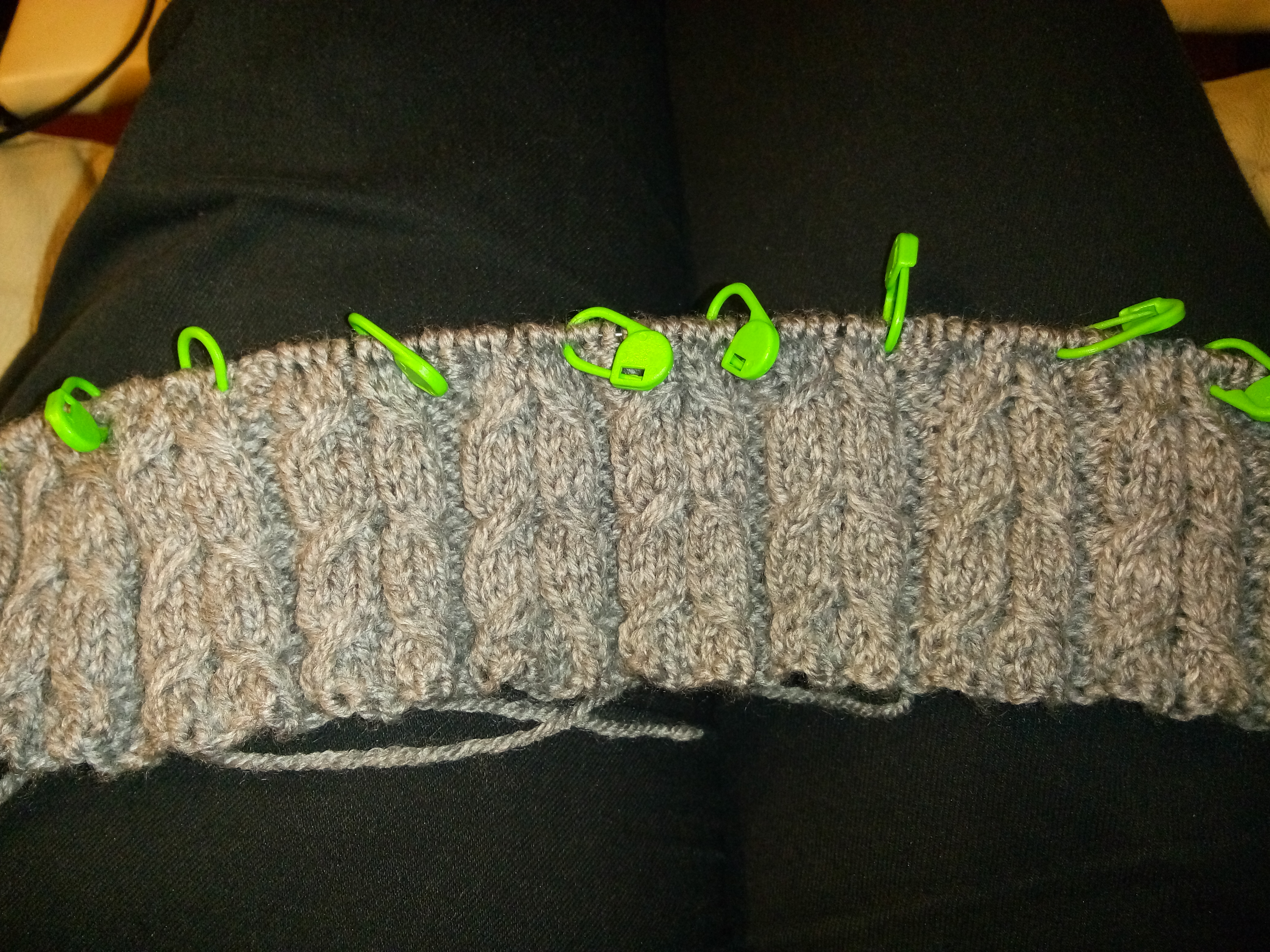
I had a plan. That plan was to make my husband’s necessarily large jumpers during the summer so that there was no pressure to finish it while the north wind blew and the leaves swirled. I’ve come to the conclusion that that was a misjudgment. In the warm weather having a large aran jumper draped cross your lap isn’t very appealling, especially when it’s such a repetitive pattern. I started putting off picking it up in the evenings and played too much Solitaire on the laptop instead. I wasn’t knitting anything else or going to my knitting groups either and had to acknowledge that my mojo had left the building. But, I’ve made progress with the first sleeve, having made 10 increases out of 12 (yup, one more than when I recorded two days ago – there’s no stopping me now!) and am now back in my stride.
Music credit:
“Carpe Diem” Kevin MacLeod (incompetech.com)
Licensed under Creative Commons: By Attribution 3.0 License
http://creativecommons.org/licenses/by/3.0/

 Welcome to Knitted guinea pigs, episode 58 of The Ordinary Knitter, the knitting podcast that’s (mostly) about the projects. Find it on iTunes through your podcast app or subscribe via the feed link on the right hand bar (https://www.theordinaryknitter.net/feed/podcast).
 This was one of those last-minute ideas that developed a life of its own. I made one for my son’s friend, then it needed a friend, then they needed lettuce, then I remembered my friend-for-whom-I-knit and for whom I haven’t yet knitted anything for Christmas used to keep guinea pigs (albeit long-haired but I’m going to ignore that inconvenient detail) so she’ll need a couple, then my husband reminded me that his mother and her twin used to keep guinea pigs so that’s another two, and now my son wants one, so it’s going to be wall-to-wall knitted guinea pigs for the foreseeable.